The Chinese room
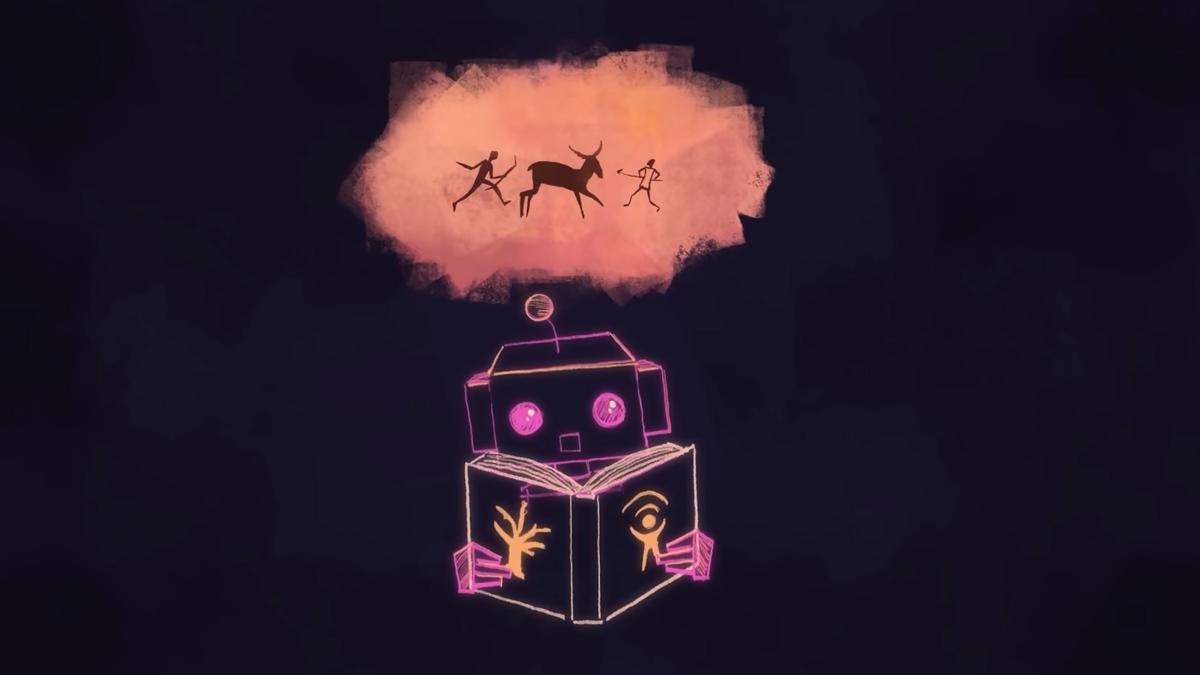
Can we test for AI consciousness when we don’t understand our own? Getting into John Searle’s ‘Chinese room’ experiment- by Aeon VideoWatch on Aeon
Résumé
Chinese room experiment
The Chinese room is a thought experiment created in 1980 by the American philosopher John Searle to challenge the idea that computers can be conscious.
Searle proposed a scenario where a person who does not understand Chinese sits in a room and follows a set of instructions to respond to questions written in Chinese.
The person uses a rulebook to match Chinese symbols with other symbols, creating replies that appear fluent to an outside observer who speaks Chinese.
Searle argued that, despite the system’s ability to produce intelligent-sounding responses, the person inside the room does not actually understand Chinese.
He extended this analogy to computers, claiming that even advanced programs that simulate understanding do not possess true consciousness or comprehension.
The experiment aims to highlight the difference between syntax (the structure of symbols) and semantics (the meaning behind symbols).
Lire l'analyse complète en 5 points →
Commentaires (0)
Connecte-toi pour commenter
Se connecterAucun commentaire pour le moment.
Voir aussi
Plus de contenus dans cette catégorie →Découvre plus de contenu sur Napseflow