March 5, 1933: The Election That Destroyed German Democracy
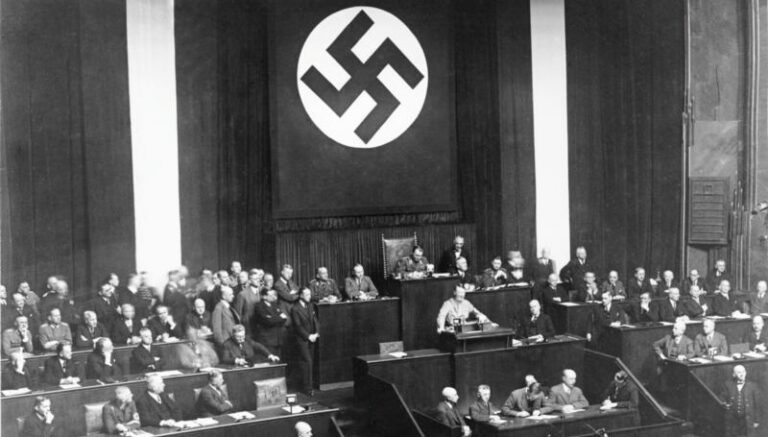
Recently, President Donald Trump banned three media organizations from the White House because of their negative coverage of him and his administration. “I mean, there’s something wrong with a country that can allow people to write purposely negative stories,” Trump
Résumé
Hitler’s rise to power
In January 1933, Adolf Hitler was appointed chancellor (head of government) of Germany by President Paul von Hindenburg, despite having lost the presidential election to Hindenburg in April 1932 by a margin of 6 million votes out of 36.8 million.
Hitler’s party, the National Socialists (Nazis), had secured the largest share of seats in the 600-seat Reichstag (German parliament) in the 1932 legislative elections.
Hindenburg dissolved the Reichstag at Hitler’s request, setting new elections for March 5, 1933, which Hitler framed as a referendum on his leadership.
He aimed to win an absolute majority of 51% to govern without forming a coalition, a goal he believed his local operatives, called Gauleiters, could achieve.
Lire l'analyse complète en 5 points →
Commentaires (0)
Connecte-toi pour commenter
Se connecterAucun commentaire pour le moment.
Voir aussi
Plus de contenus dans cette catégorie →Découvre plus de contenu sur Napseflow