Holiness and Hedonism: On the Contradictory Duality of American Power
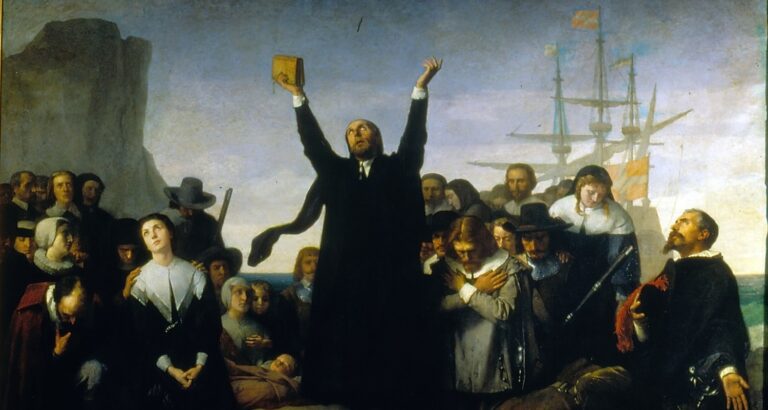
On December 20, 1606, three small ships—the Susan Constant, the Godspeed, and the Discovery—slipped into the gray winter current of the Thames River. On board were 145 men, a mix of settlers and seamen, grim-faced as they left the shores
Résumé
Early American settlers
In December 1606, three English ships—the Susan Constant, the Godspeed, and the Discovery—sailed from England to North America carrying 145 men.
Their mission, outlined in the Virginia Company’s charter, was twofold: to establish an English settlement and to spread Christianity among Indigenous peoples.
The settlers were instructed to convert Native Americans from their 'heathen' beliefs to Christianity, describing their task as rescuing 'poor and miserable souls wrapped up into death in almost invincible ignorance.' This divine mission framed colonization not as a commercial venture but as a moral duty to save souls and spread civilization.
The settlers planted a cross upon arrival at Cape Henry in 1607, symbolizing their claim to the land and their religious purpose.
Their goal was to create a society that reflected their strict Christian values, though their actions often conflicted with the realities of survival and cultural differences.
Lire l'analyse complète en 7 points →
Commentaires (0)
Connecte-toi pour commenter
Se connecterAucun commentaire pour le moment.
Voir aussi
Plus de contenus dans cette catégorie →Découvre plus de contenu sur Napseflow