How the Digital Attention Economy Has Taken Over Our Real-World Lives
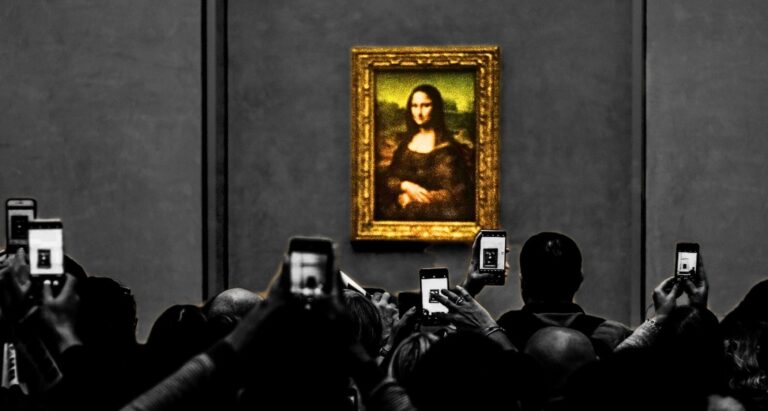
When I visited the Louvre Museum in Paris, I was struck by how small the Mona Lisa looked in person—a common reaction—and by how most of the people in the room were not looking at the painting itself. They were
Résumé
Digital attention economy
The digital attention economy refers to the way online platforms compete for users' limited time and focus, treating attention as a valuable resource that can be bought, sold, or monetized.
This concept emerged as the internet evolved from a tool for information to a space where businesses profit from capturing and retaining users' attention.
Companies like social media platforms, search engines, and streaming services design algorithms to maximize engagement, often prioritizing entertainment or emotional triggers over meaningful content.
For example, platforms may use push notifications (alerts sent to users' devices to encourage app usage) or infinite scroll (a design feature that automatically loads new content as users scroll, eliminating the need to click) to keep people engaged longer.
The goal is to sell this attention to advertisers, who pay for the opportunity to display ads to captive audiences.
In 2023, global digital advertising spending reached $600 billion, highlighting the scale of this economy.
Lire l'analyse complète en 4 points →
Commentaires (0)
Connecte-toi pour commenter
Se connecterAucun commentaire pour le moment.
Voir aussi
Plus de contenus dans cette catégorie →Découvre plus de contenu sur Napseflow